
by admin | Jan 15, 2016 | Accounting, Advisory, Enterprise, Finance, Fugacious, Professional, Uncategorised
Confirmation of 2016 Member in Practice status from the Chartered Institute of Management Accountants....

by admin | Nov 19, 2015 | Advisory, Amaranthine, Enterprise, Uncategorised
We recently attended a crowdfunding seminar hosted by Startup Direct and Paul Grant of the Funding Game. Simon, our Business Development Manager, was sent to make copious notes. So here’s his take on the Five Points of Calvinism. Err, sorry. Crowdfunding. Point 1: TALK Spend your time in this pre-prep phase generating contacts and talking to possible investors and buyers. This will serve two purposes: Your potential investors will feel more involved and in sync with your idea and vision. Then, when the time comes, they will be more likely to invest because this is their project, too. You’ll get a second opinion on your product or service. You may be working on false pre-suppositions about your target market and what they want. This will help you to find out more about the problem you are addressing. Point 2: UNITE This is where your real preparation takes place. You must drum up the promises you got from Point 1 and unite this into a sizeable committed line even before you launch your crowdfunding campaign. Your should have at least 40% of the funding for your round pledged before you begin your campaign. This will give your pitch more credibility when you launch because so many people have already chosen to invest in your idea. Point 3: LURE Reel ’em in! Use your campaign design to lure the remaining 60%, and never skimp on the work you put in before the campaign. A few things to keep in mind: Your message should be clear and simple, should have a summary of where you are, where you are going and what you need...
by admin | Aug 14, 2015 | Uncategorised
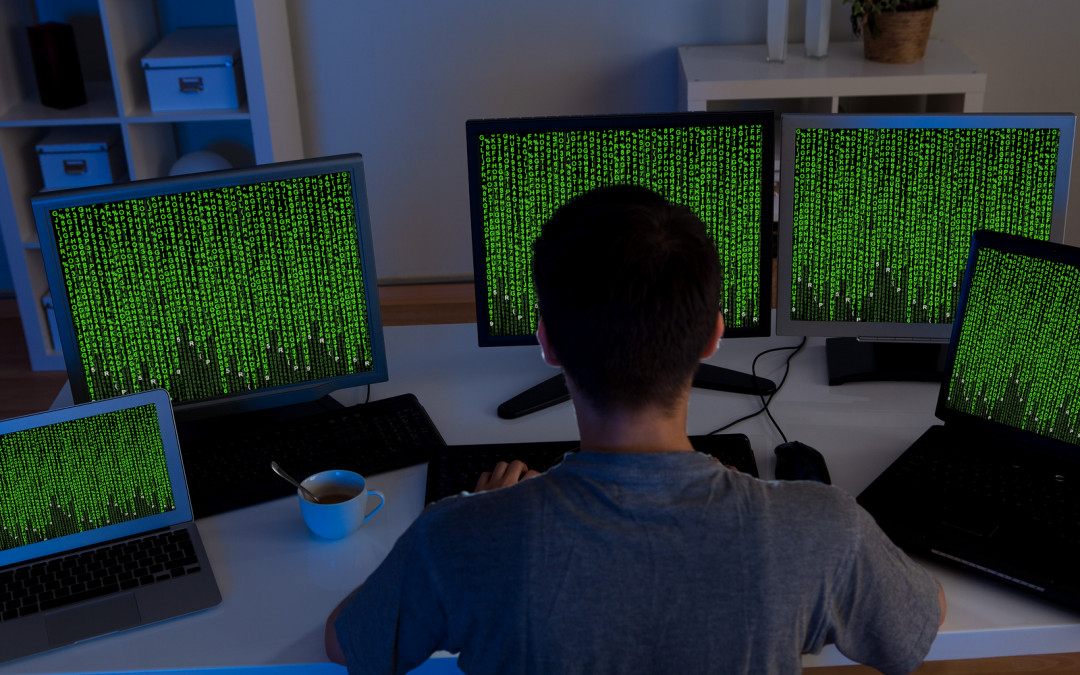
SmallBizDaily is an American website which does what it says on the tin – it provides news on things which matter to small businesses. So visitors in September 2012, not least among them the site’s owner, were shocked to find that it was not showing small business news, but instead displayed extremist terrorist videos. The site had been hacked months before, and the evidence had only just appeared. Why would anyone do this? Taking the question a step further, why would anyone want to hack the website or servers of a small business? In this previous post, I described a slightly implausible scenario where disgruntled customers wanted revenge. Most disgruntled customers are unlikely to go this far. A competitor might also want access to your accounts or to send your website offline – but if you’re a small company, you’re unlikely to be attracting that sort of attention. There’s another threat out there though, as SmallBizDaily discovered: cybercriminals. You might assume that cybercriminals would only be interested in the big firms, but you’d be wrong. Symantec found that between 2010-2012, 40% of all targeted attacks were aimed at small or medium businesses. It actually makes a lot of sense for hackers to target these. Firstly, your business is more valuable to hackers than you imagine. Even if there’s not much money that they could transfer (supposing they were to have located enough banking information to access a company account), they could modify your website to display spam or other unwanted things. This could get you delisted from Google and other search engines, with horrific implications for future sales. Your...
by admin | Aug 7, 2015 | Uncategorised
We know that our data can be vulnerable wherever it’s stored, but the News of the World hacking scandal showed that mobile represents a particularly problematic environment. Investigators breaking into Milly Dowler’s phone shocked the nation, but also revealed once again how insecure our personal data can be. So what can we do about it? There always seems to be some hack in the news these days – but it’s good to keep in mind that most modern mobiles are secure. Smartphones are essentially computers with the ability to use mobile networks, and like other computers the information they hold can be protected with encryption. The problem is that, by default, much of it isn’t. For example, it emerged in 2014 that the NSA and GCHQ could intercept data sent from apps such as Angry Birds, potentially revealing information about players’ age, sex and their device’s unique identifier. This doesn’t sound like a big deal – and for most people it’s not – but it shows how your personal information is at risk in a bewildering number of ways. Realistically, there’s very little you can do to stop agencies such as the NSA or GCHQ surreptitiously accessing your information. Against less sophisticated hackers, however, it’s a different story. Here, encryption can work very well – the trick is making sure your apps, especially those you use to send secure communications, actually use it. This is especially important with services such as online banking or accountancy solutions such as Receipt Bank. The Receipt Bank app lets you photograph your receipts and then automatically uploads them to its servers and extracts...
by admin | Jul 31, 2015 | Uncategorised
In early 2014, the New York Times reported that US law firm Mayer Brown LLP may have had confidential emails between it and Indonesia, whom it was advising in a trade dispute case, monitored by the Australian Signals Directorate – their equivalent of the NSA or GCHQ. High-profile cases like these may seem unlikely to affect small businesses, and most malicious parties don’t have the resources national intelligence agencies do. But cybercrime is a growing problem, and one of the reasons is that emails are often unsafe. What actually happens when you press ‘Send’? It depends on the provider, but for most cloud-based services such as Gmail, when you press send your email is sent via an encrypted (SSL/TLS) connection to Google’s servers. Here it’s checked for spam and viruses, and is duplicated so there are backups. Then it’s sent on, again via an encrypted connection, to the recipient. The sending process, therefore, is relatively safe (as long as your connection is encrypted – not all are). But what about the emails themselves? They often contain sensitive data, but they’re in plain text format. This means that if someone can access the email file, possibly as it moves through the internet or possibly when it reaches its destination, then they can read it. There are methods to protect your data – PGP (Pretty Good Protection) is one. It works very well: you just need to generate a private and public encryption key with one of a number of providers, then share that public key with everyone whilst keeping the private key totally secret, then find an add-on to an...
